Our sales consultants and experts
Specialist consultant
Receive Product Tariffs
Conditions of cooperation

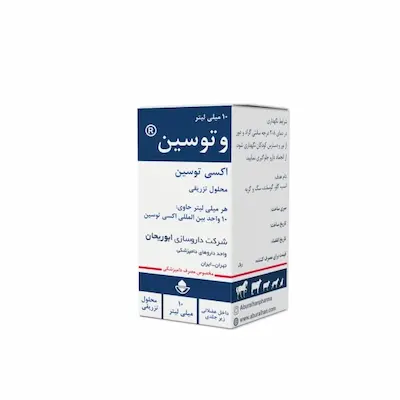
وتوسین

اكسی توسین

Type of medicine

,

Target species

Our sales consultants and experts
Specialist consultant
Receive Product Tariffs
Conditions of cooperation

Packaging

10 mL vial

Compounds

Each milliliter contains 10 International Units of synthetic oxytocin.

Mechanism of the Effect

posterior pituitary gland. The release of oxytocin from its storage site depends on signals received from the nervous system. Reflexes generated by the fetus in the birth canal, stimulation of the mammary glands during suckling, and stimulation of the reproductive tract during mating send a neural signal to the hypothalamus and then to the posterior lobe of the pituitary gland, causing oxytocin release from its storage.

Oxytocin activates the enzyme guanylyl cyclase, increasing the movement of sodium ions from cell to cell, leading to a wave of neural depolarization in the smooth muscles of the uterus, which ultimately results in myometrial contractions.

The smooth muscles of the uterus naturally exhibit spontaneous movements. The myometrial response to oxytocin depends greatly on its sensitivity to estrogen or progesterone. Estrogen levels are high during proestrus and estrus phases of the estrous cycle, making the myometrium highly responsive to oxytocin. Conversely, during diestrus and pregnancy, progesterone levels increase and inhibit the effect of oxytocin.

In most domestic animals, before parturition, progesterone decreases and estrogen increases, facilitating the effect of oxytocin-like substances on the uterus.

Vetusin® physiologically plays an important role in estrus, sperm motility, and movement of the fertilized egg, assisting in parturition in most animal species.

Vetusin® also causes contraction of myoepithelial cells of the mammary gland (basket cells), and by contracting the alveoli, it facilitates milk ejection.

Epinephrine at physiological levels inhibits the effects of oxytocin; therefore, animals should not be stressed or agitated when administering Vetusin®.

Vetusin® has little effect in male animals but may facilitate sperm transport in the reproductive tract.

Use case

Assistance and facilitation of natural labor (if the cervix is dilated)

Aid in placental expulsion (if the attachments are loosened)

Assistance in uterine involution after parturition in most livestock

Dystocia (at moderate doses and under direct veterinary supervision)

Milk ejection and treatment of mammary gland tumors and agalactia after delivery

Pyometra and metritis

Uterine hemorrhage

Uterine weakness and decreased uterine activity

The amount and how to use

Injection is administered subcutaneously and intramuscularly, while intravenous injection should be done slowly and in coordination with the animal’s needs and response. In horses, and especially in cattle, epidural injection given gradually produces a stable and prolonged effect.

Animal Milk Ejection (IU) Obstetrics (IU)
Cat 1–10 5–10
Dog 2–10 5–25
Sheep 5–20 30–50
Cattle 10–20 75–100
Horse 10–20 75–150

Caution

Use only as prescribed by a veterinarian.

Use with caution in cases of heart and kidney failure.

Avoid using the drug in cases of abnormal labor or obstruction in the birth canal.

Injection should be performed carefully and under veterinary supervision to prevent strong uterine contractions.

Concurrent use with other drugs affecting the nervous or muscular systems should be done under veterinary consultation.

Store the medication at the appropriate temperature (2 to 8°C) and protect it from freezing.

In case of allergic reactions, discontinue use and monitor the animal closely.

Drug interference

Adrenergic antagonists (such as epinephrine) may reduce the effect of oxytocin.

Strong analgesics or anesthetics may weaken uterine contractions and reduce the efficacy of oxytocin.

Concurrent use with reproductive hormonal drugs should be done under veterinary supervision.

Oxytocin receptor antagonists (if present) may decrease the drug’s effects.

Maintenance conditions

Store at 2–8°C, protected from light, in a dry place. Protect the drug from freezing.

Related products